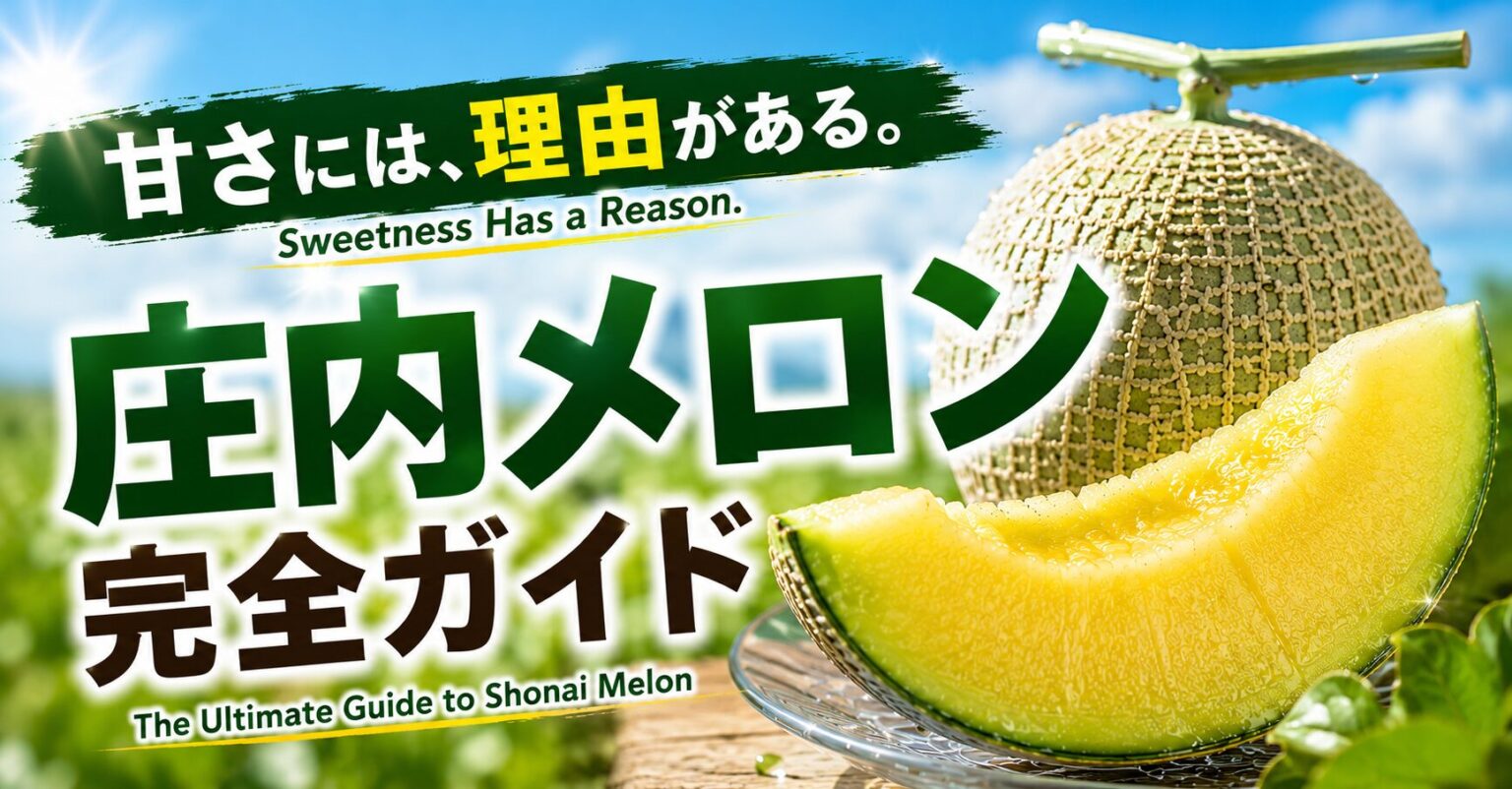
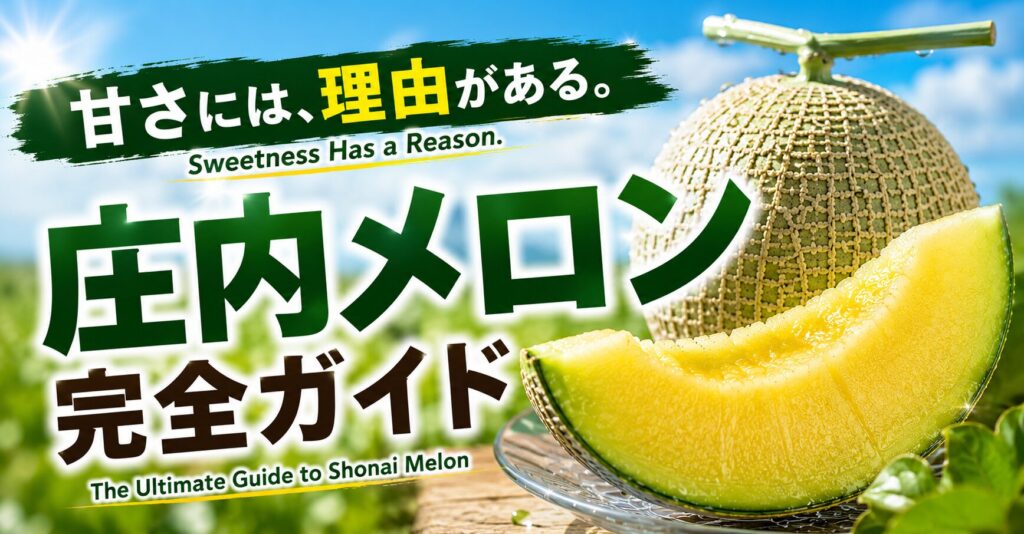
In Japan’s Shonai region, summer has a flavour — and it is melon.
Ask anyone here what summer means and the list is always the same: the sacred peaks of Dewa Sanzan, the Sea of Japan, fireworks over the river, and Shonai melon. But this is not just another sweet melon.
This is the story of how a single fruit can taste so completely of one place — the sand, the sea wind, the hands that raise it — and why in Japan a melon is treated less like a snack and more like a small, edible work of art.
A “Miracle” Grown on Sand Dunes
Shonai melon grows on the Shonai Sand Dunes, a thirty-kilometre ribbon of sand running between the cities of Tsuruoka and Sakata. Raising melon on dunes is unusual even in Japan — and it is the secret behind the fruit’s character.
Three gifts the dunes give that an ordinary field cannot:
- Sharp-draining sand that makes the roots work, concentrating the flavour
- A wide swing between day and night temperatures, which loads the fruit with sugar
- Mineral-rich wind blowing in off the Sea of Japan
Together they produce a melon that is dense, intensely sweet, and deeply perfumed.
Wine has a word for this: terroir — the idea that a place writes itself into the taste. Shonai melon is terroir you can eat.
One Vine, One Melon
Shonai’s growers are quietly obsessive. Most leave a single fruit on each vine, then pour all of the plant’s energy — and a great deal of human attention — into that one melon. It is also a big part of why fine Japanese melons cost what they do.
Inside the greenhouse, temperature, humidity and sunlight are judged by feel — a skill that takes years to earn. Nothing is rushed, so the quality barely wavers from one fruit to the next.
The result is engineered for far more than sweetness: juiciness, aroma and a clean finish are all part of the design. This is a craftsman’s melon.
When the Place Name Is the Brand
Many famous Japanese melons are branded by variety — “Yubari King,” “Higo Green.” Shonai melon is different: here, the name of the place is itself the brand.
- “Sand-dune melon” from Tsuruoka
- “Andes” and “Earl’s” varieties from Sakata
Several different cultivars are all sold under the single name “Shonai melon,” because in this region the name of the land is the guarantee of quality.
It is why locals will tell you the best melon is the one you buy where it grows — a small pleasure that belongs to the place itself.
How Shonai Melon Differs from the Rest
Set it beside melons from elsewhere in Japan and the “Shonai-ness” shows up in every row — in the taste, the method, and the land alike.
| Point | Shonai Melon | Other regions (Yubari, Kumamoto, Ibaraki, etc.) |
|---|---|---|
| Land | Sand-dune minerals + superb drainage | Mostly flatland or volcanic-ash fields |
| Growing | One fruit per vine; costly, hands-on care | Multiple fruits per vine is the norm |
| Day–night temp swing | Wide — drives up the sugar | Varies by region |
| Branding | Leads with the place name (Shonai) | Leads with the variety name (e.g. Yubari) |
| Season | Mid-June to early August | May–September, depending on region |
Taste, growing, land — look anywhere, and the character of Shonai comes through.
When It’s Best — and How to Tell It’s Ready
The season runs from mid-June to early August, and the fruit shipped in mid-to-late July is often the very finest, at the peak of both sugar and scent.
Shonai melon keeps ripening after it is picked. Rather than eating it straight away, let it rest at room temperature for three to five days, and watch for these signs:
- The stem begins to wither and soften
- A sweet fragrance starts to rise on its own
- The base yields just slightly when you press it gently
Cut it open, and when the whole kitchen fills with perfume, you have timed it right. Chill it for only a few hours before eating — too cold, and the sweetness goes into hiding.
A Gift — for Others, or for Yourself
In Japan, fruit is a classic present, and melon sits near the very top. Sending one for ochūgen — the midsummer season of thank-you gifts — is a quiet ritual of its own; choose one shipped straight from the farm and still a few days from ripe, and giver and receiver alike get to meet it at its peak.
At farm stands and roadside stations around Shonai you will also find melons sold by the half to eat on the spot, and local-only treats such as melon parfaits — a sweet reward in the middle of a journey.
The Real Pleasure Is Tasting the Whole Story
Shonai melon is not simply a “high-sugar” melon.
It is the sand and the sea wind, the patience of the growers, and generations of trust folded into a single place name — all of it, in one fruit.
A souvenir, a family table, a reward for a summer well spent. However you come to it, taste the story along with the fruit.
Where to Find It
If your travels ever bring you to Tsuruoka or Sakata, walk past the supermarket and head for a local farm stand, where the fruit is freshest and chosen at its best.
- Shonai Sand-Dune Melon farm stand
- JA Tsuruoka farmers’ market “Montoāru” (Tsuruoka City)
- Shonai Tourism & Products Hall “Furusato Honpo”
Ask the seller when it will be ready to eat — they will tell you the exact day. A ripe Shonai melon is a whole region’s summer pressed into a single slice. Well worth the detour.
📖 つるおかグルメ の関連記事
 Not Udon, Not Quite Soba: Mugikiri, the Cold Summer Noodle of Yamagata
 🍑 Shonai Persimmon Tales (3): A “Persimmon Curtain” Hanging Under the Eaves
 🍊 *Shonai Persimmon Story, Part 2 — Persimmons: Nature’s Edible Beauty Serum*
- STAY WITH US -
Your Base for Exploring Tsuruoka
A small guesthouse in central Tsuruoka, Yamagata. The perfect base for your trip to Dewa Sanzan and Shonai.
Book Now →