
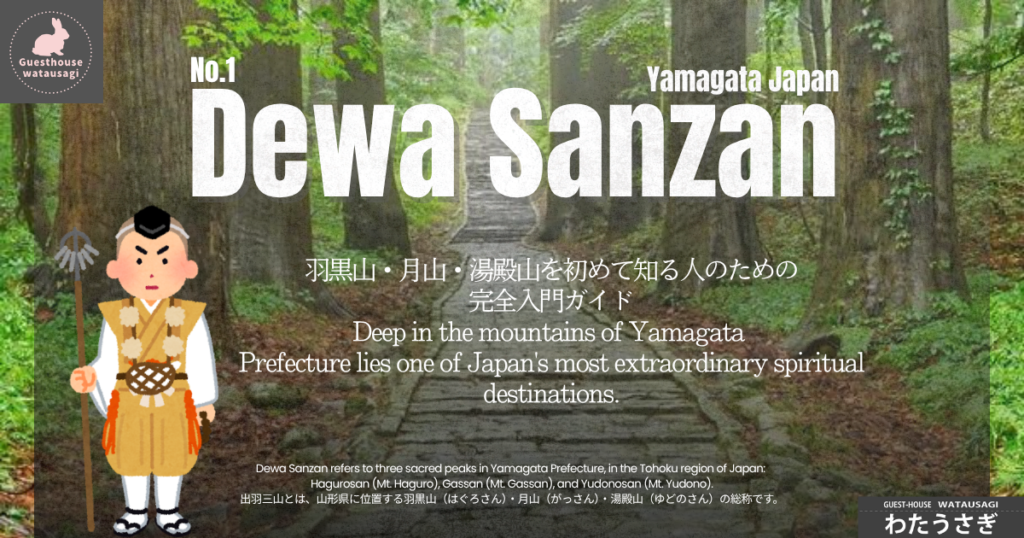
Dewa Sanzan (meaning "Three Mountains of Dewa") refers to Mt. Haguro, Mt. Gassan, and Mt. Yudono.
Together, they form a sacred complex that has drawn pilgrims, mountain ascetics, and spiritual seekers for over 1,400 years.
What makes Dewa Sanzan so unique isn't just its age or its scenery — it's the idea behind the pilgrimage itself. Visiting all three mountains represents a journey through present, past, and future: a symbolic death and rebirth known as the 'Pilgrimage of Rebirth.' Whether you're a hiker, a history lover, or simply curious about Japan's lesser-known sacred sites, Dewa Sanzan is an experience unlike any other. 😊
In this guide, I'll walk you through what each mountain offers, who each one is best for, and how to plan your visit.
What Is Dewa Sanzan?
Dewa Sanzan refers to three sacred peaks in Yamagata Prefecture, in the Tohoku region of Japan: Hagurosan (Mt. Haguro), Gassan (Mt. Gassan), and Yudonosan (Mt. Yudono).
For over 1,400 years, these mountains have been the center of Shugendo (修験道) — a uniquely Japanese spiritual practice that blends Shinto, Buddhism, and ancient nature worship.
Practitioners known as yamabushi (mountain ascetics) would undergo intense physical and spiritual training in these mountains, believing that enduring hardship in nature brought them closer to enlightenment.
Until the Meiji Era (1868), Dewa Sanzan was a center of deep Buddhist-Shinto fusion. Although many Buddhist elements were removed during that period, the mountains continue to hold immense spiritual significance today — and the yamabushi tradition is still very much alive.
→ Want to know more about Shugendo? Read: 'Shugendo: The Ancient Mountain Practice That Still Lives in Dewa Sanzan' [Article No.16]
Mt. Haguro (Hagurosan) — The Mountain of the Present
Mt. Haguro is the most accessible of the three mountains, standing at just 414 meters (1,358 ft). It's the perfect starting point for first-time visitors — and even if you only have time for one mountain, make it this one.
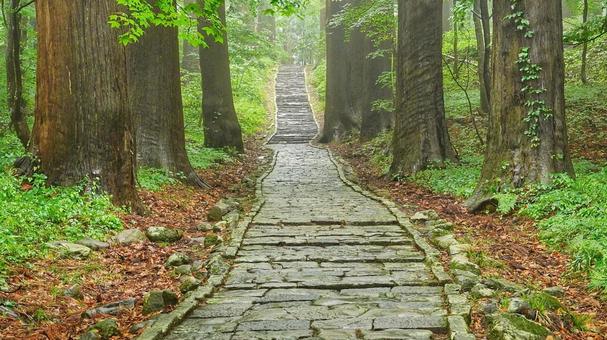
The highlight of Haguro is the 2,446-step stone staircase that winds through an ancient cedar forest. Some of these trees are between 300 and 600 years old, towering over 30 meters high. The atmosphere is unlike anything you'll find in a typical Japanese city shrine — it feels genuinely ancient.
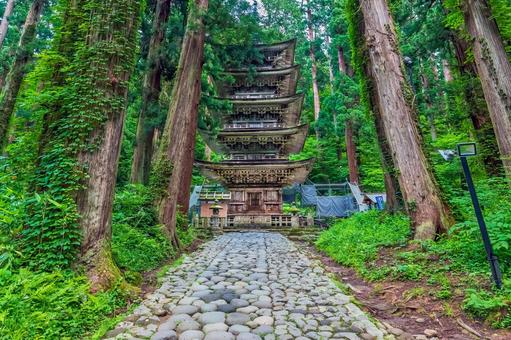
2,446Midway up the stairs, you'll find the Five-Storied Pagoda (Goju-no-to), a National Treasure and the oldest pagoda in the Tohoku region. At the summit sits the Sanjin Gosaiden — a grand, thatched-roof shrine that houses the deities of all three Dewa Sanzan mountains in one place, making Haguro the only mountain you can visit year-round.
Best for:
- First-time visitors to Dewa Sanzan
- Those who prefer not to hike (you can drive to the summit)
- Culture, history, and architecture lovers
- Photographers — every corner is stunning 📸😊)
Access
Access: About 30 minutes by car from central Tsuruoka. Bus service is also available from Tsuruoka Station.
→ How to get there: Dewa Sanzan Access Guide [Article No.3]
→ More on Haguro: Mt. Haguro's Top 10 Highlights [Article No.5]
Mt. Gassan (Gassan) — The Mountain of the Past
At 1,984 meters (6,509 ft), Mt. Gassan is the tallest of the three mountains and the only one that requires a real hike. It's part of Japan's 100 Famous Mountains list (Hyakumeizan) — a bucket-list destination for serious hikers.
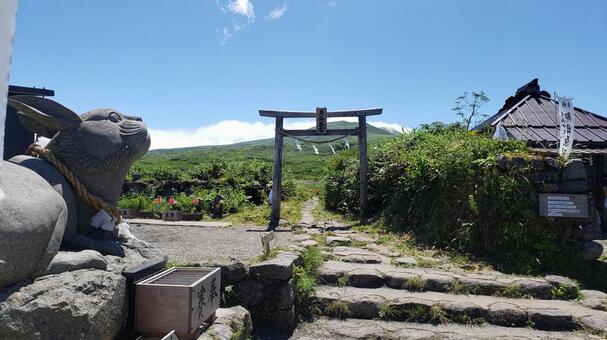
The trail takes you across snowfields even in July, past rare alpine wildflowers, and up to Mt. Gassan Shrine at the summit. The combination of the lunar landscape, shifting mountain mist, and the ancient shrine at the top creates an atmosphere that's genuinely hard to describe — you have to experience it yourself.
Mt. Gassan is open from early July to mid-October. Snow can be found on the trails well into summer, so proper hiking gear and layers are essential even in August.😊
Best for:
- Hikers and outdoor enthusiasts
- Nature lovers (alpine wildflowers, snowfields, dramatic views)
- Those seeking a physical and spiritual challenge
Access
About 1 hour by car from central Tsuruoka. Trailheads at Usuzawa-guchi and the 8th Station.
→ Full hiking guide: Mt. Gassan — What to Wear, What to Expect [Article No.9]
Mt. Yudono (Yudonosan) — The Mountain of the Future
Mt. Yudono is the most sacred — and the most mysterious — of the three mountains. Before entering the sacred grounds, visitors are asked to remove their shoes and receive a ritual purification. The contents of the inner shrine are considered a closely guarded secret:
'Do not speak of it. Do not ask of it.'
What I can tell you is that it's a completely different experience from any other shrine in Japan. Personal, surprising, and utterly unforgettable. You'll need to go yourself to find out what's inside. 😊
Mt. Yudono is closed in winter (approximately November to late April).
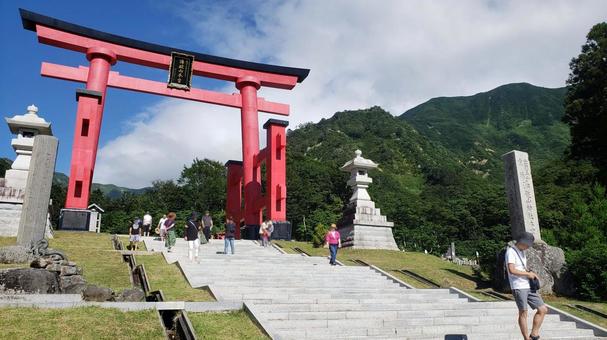
Best for:
- Those seeking a truly unique, once-in-a-lifetime spiritual experience
- Pilgrims completing the full Dewa Sanzan circuit
- Anyone who wants to see a side of Japan that most tourists never find
Access
About 1 hour by car from central Tsuruoka.
→ Yudonosan's secrets revealed (as much as we can say): [Article No.10]
3Planning Your Visit: Practical Information
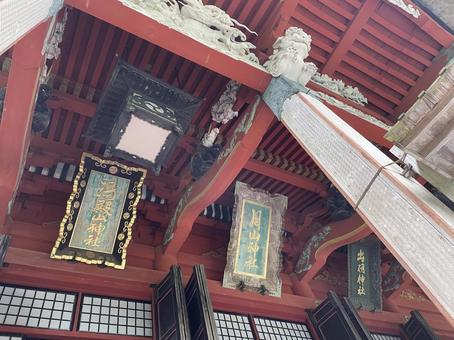
The Recommended Order
The traditional pilgrimage sequence is Haguro → Gassan → Yudono, representing the journey from the present through the past and into the future. That said, if you're short on time, visiting Haguro alone is completely worthwhile
it's accessible, stunning, and rich with history.
How Many Days Do You Need?
- Mt. Haguro only: Day trip is possible
- Haguro + Yudono: 1 night, 2 days
- All three mountains: 2 nights, 3 days recommended (Gassan requires a full hiking day)
When to Visit
If you want to visit all three mountains, aim for July to October — the only window when all three are open simultaneously. Mt. Haguro is open year-round and is spectacular in winter, when the stone steps and ancient cedars disappear under deep snow. Mt. Gassan and Mt. Yudono both close during the winter months.
→ Season-by-season guide: When to Visit Dewa Sanzan [Article No.2]
→ Full access guide: How to Get to Dewa Sanzan [Article No.3]
Wrap-up
Dewa Sanzan is one of those places that shifts how you see Japan.
Most travelers who visit describe it as one of the most powerful spiritual experiences they've had in the country — and yet it remains remarkably off the radar compared to Kyoto or Tokyo.
Whether you come for the hiking, the history, the photography, or the spiritual journey,😊
I hope something stays with you long after you've left the mountains. 😊
Guest House Watausagi is a popular inn for guests who like temples, shrines, and power spots.
This guesthouse is located right between Mt. Hagurosan, Mt. Gassan, and Mt. Yudonosan,
Guesthouse Watausagi sits right in the heart of Dewa Sanzan territory — perfectly positioned between Hagurosan, Gassan, and Yudonosan. Guests come from across Japan and around the world to explore these sacred mountains. Make Watausagi your base and discover the spiritual world of Dewa Sanzan! 😊😊
We also share the charms of our home region — Yamagata, Tsuruoka, and the Shonai area.
I'm always sharing updates and local tips on Instagram Stories. Follow us on Instagram and stay in the loop! 😊😊
いいね・シェアもうれしいです💕
🏔️ 出羽三山入門シリーズ
 【No.2】When Should You Visit the Dewa Sanzan? A Local’s Guide to Seasonal Highlights and Travel Tips 🌿
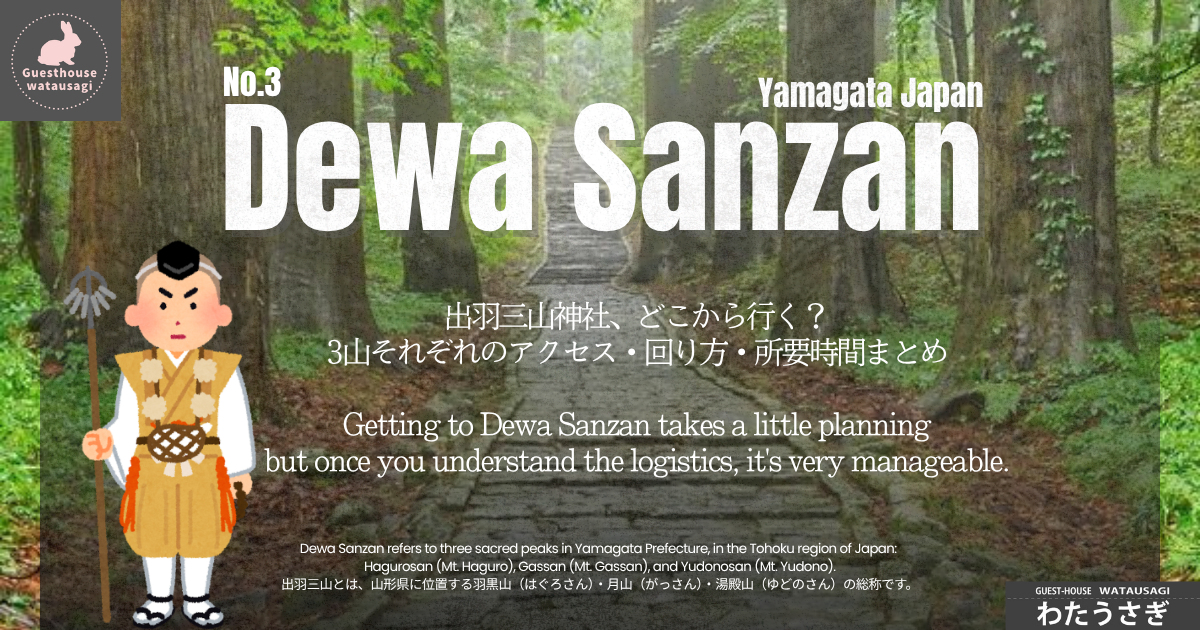
 【NO.3】Getting to Dewa Sanzan takes a little planning — but once you understand the logistics, it's very manageable.
📖 やまがたいいとこ の関連記事
 Demons Dancing on Mount Haguro!?
 Why a dragon god at a Buddhist temple? The mystery of Zenpoji (Tsuruoka) and its sea-guarding dragon faith
 Michelin-Starred Sakata: A Two-Star Tour Built on the Wealth of the Kitamae Ships
- STAY WITH US -
Your Base for Exploring Tsuruoka
A small guesthouse in central Tsuruoka, Yamagata. The perfect base for your trip to Dewa Sanzan and Shonai.
Book Now →