You've climbed the stone steps, bowed at the summit shrine — and now you're wondering what comes next.
The foot of Mt. Haguro is packed with places you can fold into the same day — temples, a famous garden, a hot spring, big views. You don't need a car: everything here is reachable from Tsuruoka Station by bus plus a little walking.
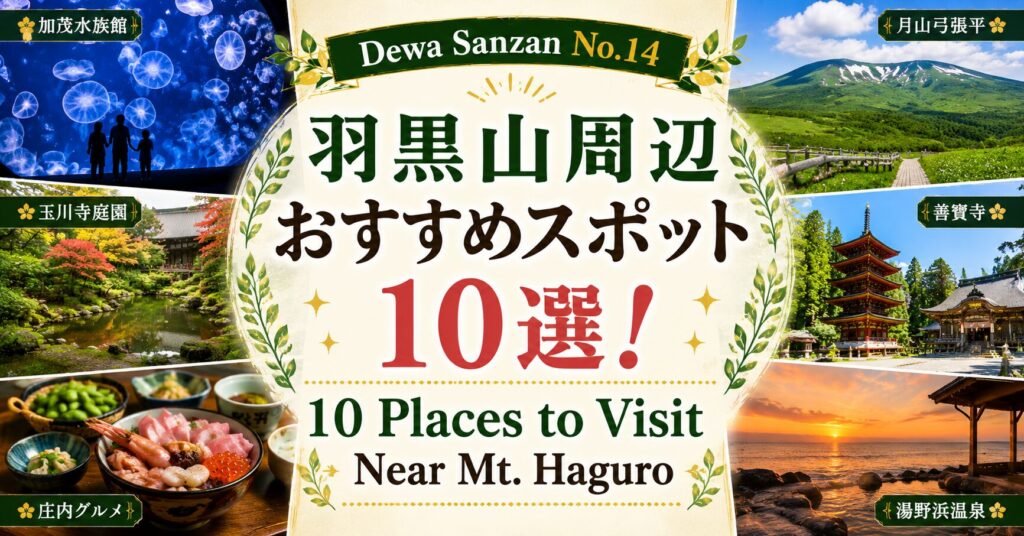
As a local, here are my 10 favourite stops around Mt. Haguro. Build one or two into your pilgrimage day and the trip opens right up 😊
→ Full Dewa Sanzan itinerary (Article No.6)
→ Mt. Haguro top 10 highlights [Article No.5]
The 10 Spots
1. Ideha Cultural Memorial Museum — Dewa Sanzan in Depth [History / Culture]
Right beside the Zuishinmon Gate, this museum lays out the history, faith and mountain asceticism (Shugendo) of the three sacred peaks. Stop here first and the climb ahead suddenly carries far more meaning.
Inside you'll find cultural treasures, ritual objects and the robes of the yamabushi mountain monks. Even on the way down it rewards you with quiet 'so that's what that was' moments.
📍 Steps from the Zuishinmon-mae bus stop; about 40 min by local bus from Tsuruoka Station. Admission charged.
2. Shozen-in Kogane-do Hall [Temple / Shonai Kannon No.1]
An old temple in the Toge district, said to have been donated by the shogun Minamoto no Yoritomo as a prayer for victory before his campaign against the Fujiwara of Hiraizumi.
Its thirty-three life-size gilded Kannon statues give the 'Golden Hall' its name; it's a nationally designated Important Cultural Property and the first stop on the Shonai Thirty-Three Kannon pilgrimage.
📍 Toge district, near the Zuishinmon Gate, walkable from the bus stop. Free to visit (some areas charge).
3. Kongoju-in Temple [Temple / Shonai Kannon No.2]
Founded in 588 and the only Tendai-school temple in the Shonai region, Kongoju-in is the second stop on the Shonai Kannon pilgrimage — perfectly paired with No.1, Shozen-in, just nearby.
Look up at the eighty painted ceiling panels of the Kannon hall, and sip the 'Kongo' spring water that has refreshed pilgrims for centuries. With a reservation you can also try the temple's vegetarian 'otera-gohan' meal, or stay overnight (one group a day).
📍 Toge district, near the Zuishinmon Gate. Meals and lodging by reservation only.
4. The Toge Shukubo Town & Shojin Cuisine [History / Experience]
Toge, at the foot of Mt. Haguro, is a pilgrims' gate town that has thrived since the Edo period. It once held over 300 lodging temples; around 30 are still living, working shukubo today.
Staying in a shukubo and sharing its vegetarian shojin meal turns a day-trip into something quietly profound. Even just strolling the stone-paved lanes between the old lodging houses has its own atmosphere.
📍 Right by the Zuishinmon Gate, easily walkable. Most shukubo meals need a reservation.
5. Gyokusen-ji Temple Garden [Garden / Culture]
A Soto-Zen temple said to date from the Kamakura period, centred on a nationally designated 'Place of Scenic Beauty' — a strolling pond garden that quietly shifts with the seasons.
In early summer a rare pure colony of Japanese primrose (kurinso) comes into bloom. After the stone steps of Haguro, there's no better place to sit and let the legs recover 😊
📍 Haguro area, about 10 min by car from Mt. Haguro. Admission charged; bus service is limited, so check ahead.
6. Gassan Visitor Center [Nature / Learning]
This center explains the plants, animals, landforms and climate of Mt. Gassan and Mt. Haguro through clear photo panels — an easy, friendly primer on the nature around you.
It also runs trekking, nature-watching and craft workshops through the year. Closed Mondays (open daily on holidays and in July–August).
📍 At the foot of Mt. Haguro. Easiest by car; bus service varies by season.
7. Sozo-no-Mori Community House [View / Experience]
From its 200-metre-high terrace this community lodge looks out over the whole Shonai plain. On a clear day the view all but forces you to stop and breathe.
It's an unhurried, off-the-radar spot — ideal if you'd rather take in the Haguro countryside slowly, away from the crowds.
📍 Haguro area; car access recommended.
8. Yamabushi Onsen Yupoka [Hot Spring / Relax]
A day-use hot spring bubbling up at the foot of the Dewa Sanzan — a relaxed, family-friendly bath that locals genuinely love.
No need to drive all the way to the coast: you can soak away the day's climbing right here in Haguro. Perfect when you don't have time to reach the seaside resorts 😊
📍 Haguro area, about 15 min by car from Mt. Haguro. Day bathing available.
9. Matsugaoka Reclamation Site [History / Japan Heritage]
In 1872 some 3,000 former Shonai samurai swapped their swords for hoes and broke this land for silk farming. It's the heart of the 'Samurai Silk' Japan Heritage story and a nationally designated Historic Site.
Five great silkworm-rearing houses from the early Meiji era still stand, now serving as a museum, craft studios and a cafe. Sitting on the plateau due west of Mt. Haguro, it's a treat for anyone who loves history.
📍 Matsugaoka, Haguro, Tsuruoka. It's downhill from Mt. Haguro and walkable, but allow a few km / about an hour — a taxi or car is handy too.
10. Ninosaka Teahouse [Food / View]
Perched at the top of the Ninosaka — the steepest stretch of the Haguro steps, nicknamed 'the oil spill' after a legend that the warrior-monk Benkei spilled his offering oil on the slope — this teahouse is your reward halfway up.
The house specialty is hand-made chikara-mochi rice cakes (soybean flour and sweet bean) with matcha. Below you spreads the Shonai plain — on a clear day all the way to Tobishima island, a view old travellers called 'the Matsushima of the land'.
📍 Atop the Ninosaka slope on the Haguro steps; about 25–30 min on foot from the Zuishinmon Gate (for those climbing). Open in season.
Building a Day Around Mt. Haguro
Here are a few ways to string the day together, by interest and stamina. Each one is shaped to work on bus plus your own two feet.
History & pilgrimage: Ideha Museum (warm-up) → Shozen-in & Kongoju-in (Shonai Kannon No.1 & 2) → the Haguro stone steps.
Gardens & relaxation: Haguro pilgrimage → the scenic garden at Gyokusen-ji → a closing soak at Yamabushi Onsen Yupoka.
Views & ease: the plain from Sozo-no-Mori terrace → chikara-mochi at Ninosaka Teahouse → a shojin dinner at a Toge shukubo.
A deeper history day: a walk through the Toge shukubo town → Haguro pilgrimage → Matsugaoka Reclamation Site (downhill on foot, or by car).
Any of these runs smoothly from Guesthouse Watausagi, set right between the three mountains. Early starts are no problem — just ask 😊
Wrap-up
The Haguro pilgrimage alone makes a full, satisfying day — but add just one or two of these stops at its foot and the trip gains real depth.
Walk the Shonai Kannon route, unwind in a famous garden or hot spring, touch history at Japan-Heritage Matsugaoka — it all stays within Haguro, so you can enjoy it without a car 😊
And don't forget the flavours only Haguro offers — the chikara-mochi at Ninosaka, the shojin cuisine of the shukubo.
→ Full Dewa Sanzan itinerary (Article No.6)
→ Dewa Sanzan access guide (Article No.3)
Guesthouse Watausagi is a favourite with travellers who love shrines, temples and power spots. It sits right between Mt. Haguro, Mt. Gassan and Mt. Yudono — the three Dewa Sanzan peaks — and welcomes guests from all over Japan and the world who care about their nature, history and faith. We'd love you to use us as your base for the pilgrimage 😊
We also share the charms of our home region — Yamagata, Tsuruoka, and the Shonai area.
I'm always sharing updates and local tips on Instagram Stories. Follow us on Instagram and stay in the loop! 😊
And a like or a share is always, always appreciated 💕
📖 やまがたいいとこ の関連記事
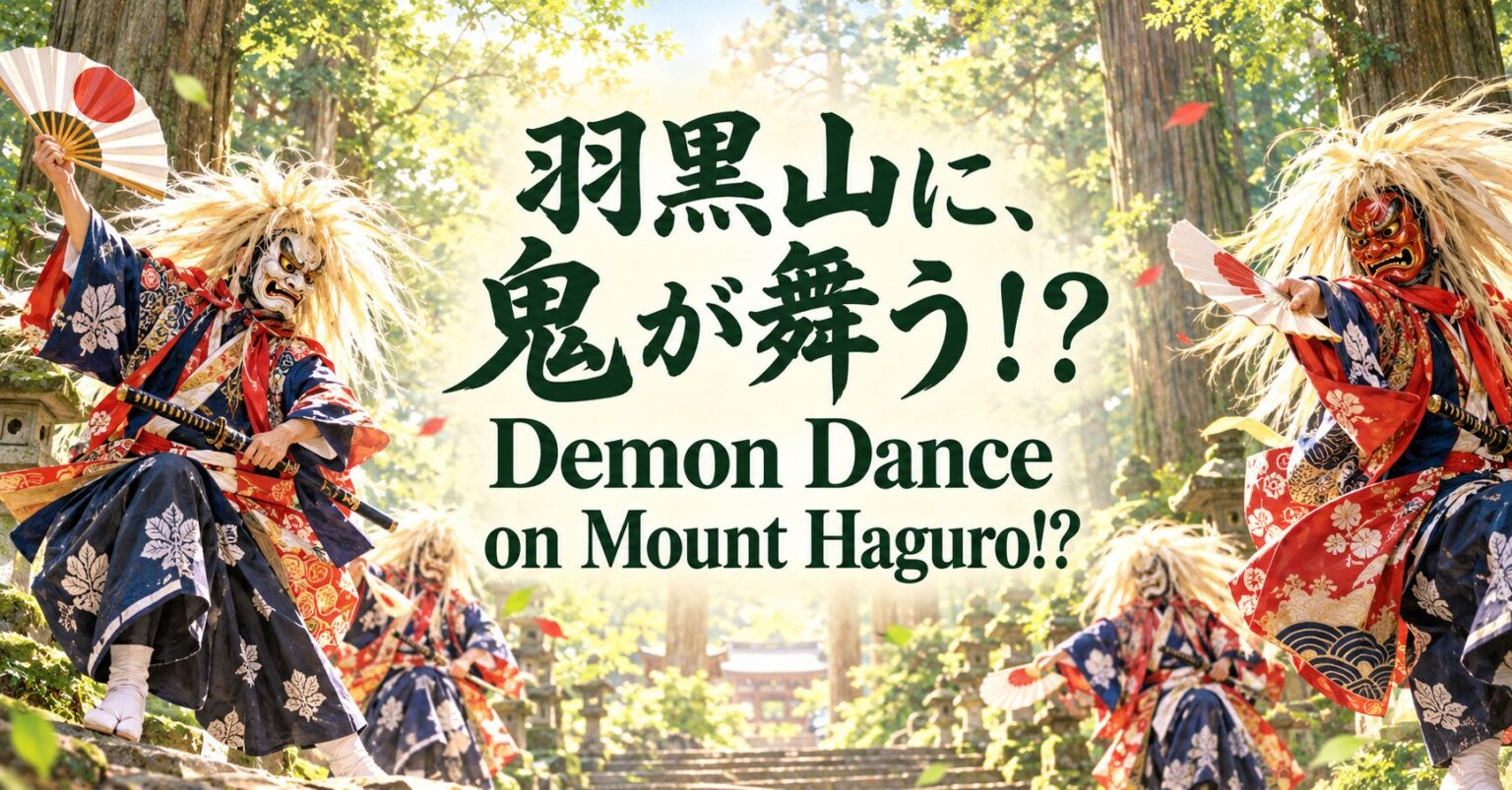
 Demons Dancing on Mount Haguro!?
 Why a dragon god at a Buddhist temple? The mystery of Zenpoji (Tsuruoka) and its sea-guarding dragon faith
 Michelin-Starred Sakata: A Two-Star Tour Built on the Wealth of the Kitamae Ships
- STAY WITH US -
Your Base for Exploring Tsuruoka
A small guesthouse in central Tsuruoka, Yamagata. The perfect base for your trip to Dewa Sanzan and Shonai.
Book Now →