
You know the red Michelin Guide, the one that awards stars to restaurants, right?
But did you know that Michelin also publishes another book, one made for travelers?
It is the Michelin Green Guide, which rates sightseeing destinations by its own standards, from natural beauty to cultural heritage. That guide has awarded a whole cluster of stars to the sights of Tsuruoka, in Yamagata Prefecture.
The rating system is simple:
★★★ … Worth a special journey
★★ … Worth a detour
★ … Interesting
Tsuruoka has it all: one of the very few three-star landscapes in all of Tohoku, a monk who became a Buddha while still alive, and a garden ranked among the finest in northern Japan.
In this article, we introduce every spot that made it into the guide, one by one.
*Star ratings follow the Michelin Green Guide (English edition, Northern Honshu) that we referenced. Ratings can change between editions and may differ from the online Green Guide Japon.
Mount Haguro ★★: Tsuruoka’s Three-Star Cedar Avenue
The most highly rated sight in Tsuruoka is Mount Haguro (Haguro-san), one of the three sacred peaks of the Dewa Sanzan. The mountain itself earns two stars (★★), and the approach climbing to its summit earns the guide’s highest rating of three stars (★★★).
First, one thing to be precise about.
Only Mount Haguro carries stars here. The other two peaks, Gassan and Yudonosan, appear in the guide’s text but are not listed as starred sights. So it is not that the Dewa Sanzan as a whole gets two stars; it is specifically Mount Haguro. (That said, Gassan and Yudonosan are both very much worth seeing in their own right.)
Step onto that approach and the air changes, cool and still. Cedars three to five hundred years old rise on both sides, and 2,446 stone steps climb to the summit, about an hour’s walk. Your breath quickens, but on this dappled, green-lit path the walk itself is the experience.
Partway up stands the five-story pagoda (★★), a National Treasure. Around 30 meters tall and crowned with five gracefully balanced roofs, it is said to be the oldest pagoda in Tohoku. Among the cedars nearby is the Grandfather Cedar (Jiji-sugi), thought to be around a thousand years old. The pagoda framed by cedars is the very image of Mount Haguro.
At the summit stands the Sanjin Gosaiden (★★), a hall that enshrines the deities of all three mountains together. Beneath its thick thatched roof, Shinto and Buddhism blend in a way that survived the Meiji-era separation of the two religions, a genuine rarity. Nearby, the pilgrim lodge Saikan (★★) is starred too, offering shojin (Buddhist vegetarian) cuisine and mountain quiet (more on this below).
Mount Haguro has long been a training ground for the yamabushi, the mountain ascetics of Shugendo, a faith that fuses Shinto and Buddhism. In white robes little changed for more than a thousand years, they walk these slopes and call to one another with conch-shell trumpets. This cedar avenue is the doorway into that world.
▶ Learn more about how to visit the Dewa Sanzan and the spiritual traditions behind them in our Dewa Sanzan blog series.
【NO.1】Deep in the mountains of Yamagata Prefecture lies one of Japan's most extraordinary spiritual destinations.
Dewa Sanzan Shrine, a “rebirth journey” through the present, past, and future
▶ Access (approx.): From Tsuruoka Station, take a Shonai Kotsu bus to the summit of Mt. Haguro (about 50 minutes, ¥850). If you walk up from the foot of the mountain, it takes about one hour.
▶ Official Website: Dewa Sanzan Shrine http://www.dewasanzan.jp/
*Times and fares vary by season; confirm with Shonai Kotsu and Dewa Sanzan Shrine.
Churen-ji ★★: A Two-Star Living Buddha
Sharing top billing with Mount Haguro (★★) is Churen-ji, a temple tucked into the hills of Oami. Linked to the monk Kobo Daishi, it enshrines a sokushinbutsu (★★): the self-mummified body of the monk Tetsumonkai (1768–1829), who became a Buddha while still alive.
The path to becoming a living Buddha is almost beyond imagining. For 1,000 days the monk ate only nuts and seeds; for the next 1,000, only tree bark and pine roots, a discipline called mokujiki that strips the body of fat and water to the extreme. At the end he drank a tea brewed from the sap of the urushi (lacquer) tree. That poison, normally used to make lacquerware, kept decay-causing insects away and helped preserve the body. Finally he sealed himself in an underground chamber, breathing through a single bamboo tube until death came. If the body did not decay, he became a sokushinbutsu (there are about twenty in Japan), one who reached enlightenment while still alive.
Look up inside the hall and you will see the coffered ceiling (★), painted in the 1980s. Meant as a charm to protect the roof from fire, it is rendered in a strikingly modern, manga-like style, an unexpected pairing. On your way out, do not miss the wooden bell (★) hanging at the entrance, made in the Meiji era. Its name, waniguchi (crocodile’s mouth), suits its wide, open shape.
▶ Access (approx.): From Tsuruoka Station, take a bus for about 40 minutes (¥1,000 round trip) and get off at Oami Bus Stop. From there, walk north for about 25 minutes. Visiting hours: 8:00 a.m.–5:00 p.m. Admission: ¥500.
▶ Official Website: Yudonosan Churenji Temple https://churenji.sansuirijuku.com/
*Source: the guide. Please confirm hours and fees.
Chido Museum ★: Relocated Architecture and a Celebrated Garden
Beside Tsuruoka Park, on the former site of Tsurugaoka Castle once held by the Sakai lords, stands the Chido Museum (★). The influential Sakai family, who owned the park, founded it in the 1950s. Historic buildings were moved here from around the region and turned into small museums of Tsuruoka’s history and culture, an open-air museum of architecture where each highlight carries its own star.
The jewel is the Japanese garden (★★), ranked among the finest in Tohoku. Beside it sits an unusual tea house with two openings (one kept dark, since dimness aids the quiet focus a tea ceremony calls for). The tea house also doubled as a workroom for calligraphy.
The former Shibuya Residence (★) is a traditional Shonai farmhouse, recognizable by its thatched kabuto-zukuri roof shaped like a samurai helmet. The Folk Implements Storehouse (★) is an ethnographic museum on the fishing life, with displays found nowhere else, including memorial steles to comfort the spirits of caught salmon.
The grounds also hold two fine Meiji-era buildings: the former Nishitagawa District Office (1881), topped by a clock tower and the prefecture’s first district office, and the former Tsuruoka Police Station (1884), its first police station. These pseudo-Western buildings carry the air of Japan’s early modernization.
▶ Discover the Chido Museum and nearby attractions in our blog guide.
Enjoy the charm of central Tsuruoka city! Shonai Shrine and 10 recommended spots around it
▶ Access (approx.): About 10 minutes by bus or taxi from Tsuruoka Station. Opening hours: 9:00 a.m.–5:00 p.m. from March to November, and 9:00 a.m.–4:30 p.m. from December to February. Admission: ¥800.
Official site: Chido Museum — https://www.chido.jp/
*Source: the guide. Confirm the latest at the official site.
Eat and Savor: More to Enjoy in the Starred Town
Once you have toured the starred sights, do not miss Shonai’s food. Make Guesthouse Watausagi your base and set out from there.
Al Checciano
The Italian restaurant that made Shonai, the capital of food, known across Japan, led by chef Masayuki Okuda. Inventive Japanese-Italian fusion built on superb local ingredients. Near the Ichirizuka in Shimoyamazoe, it is essential to any conversation about Tsuruoka’s food.
*Tue–Sun 11:30–14:00 / 18:00–21:00 (approx.; confirm and reserve). Official site:https://www.alchecciano.com/
Saikan, the Mount Haguro Pilgrim Lodge
Halfway up Mount Haguro, the 300-year-old pilgrim lodge Saikan serves shojin cuisine made with mountain vegetables and mushrooms from Gassan (reservations required). A fitting finish to a walk up the cedar avenue, a meal that could only come from this place.
*Reservations and fees: confirm with Dewa Sanzan / Saikan. Official site:http://www.dewasanzan.jp/publics/index/64/
A Model Route, and a Tsuruoka Aside
A half-day to full-day example: Mount Haguro (the approach and pagoda) → lunch → Chido Museum → (out to Churen-ji if time allows). Churen-ji sits well outside the city center, so allow a full day if you want to take it slowly.
One last little Tsuruoka story. This is the home of dadacha-mame, edamame said to be the most delicious, and the priciest, in Japan. They were so good, legend says, that a Sakai lord had his retainers bring him some every single day. After the starred sights, taste the local flavors too.
When it comes to “Summer in Shonai,” it’s got to be dadacha beans!
In closing
A three-star cedar avenue, a two-star living Buddha and its temple, and a garden among Tohoku’s finest: Tsuruoka is a town Michelin judged worth a special journey. Because the sights lie a little apart, rather than racing through in a day, it is best to stay in Shonai and savor them into the quiet of morning and evening. Make Guesthouse Watausagi your base.
Make Guesthouse Watausagi your base for exploring Shonai. Book here → https://wata-usagi.com/reservation/
📖 やまがたいいとこ の関連記事
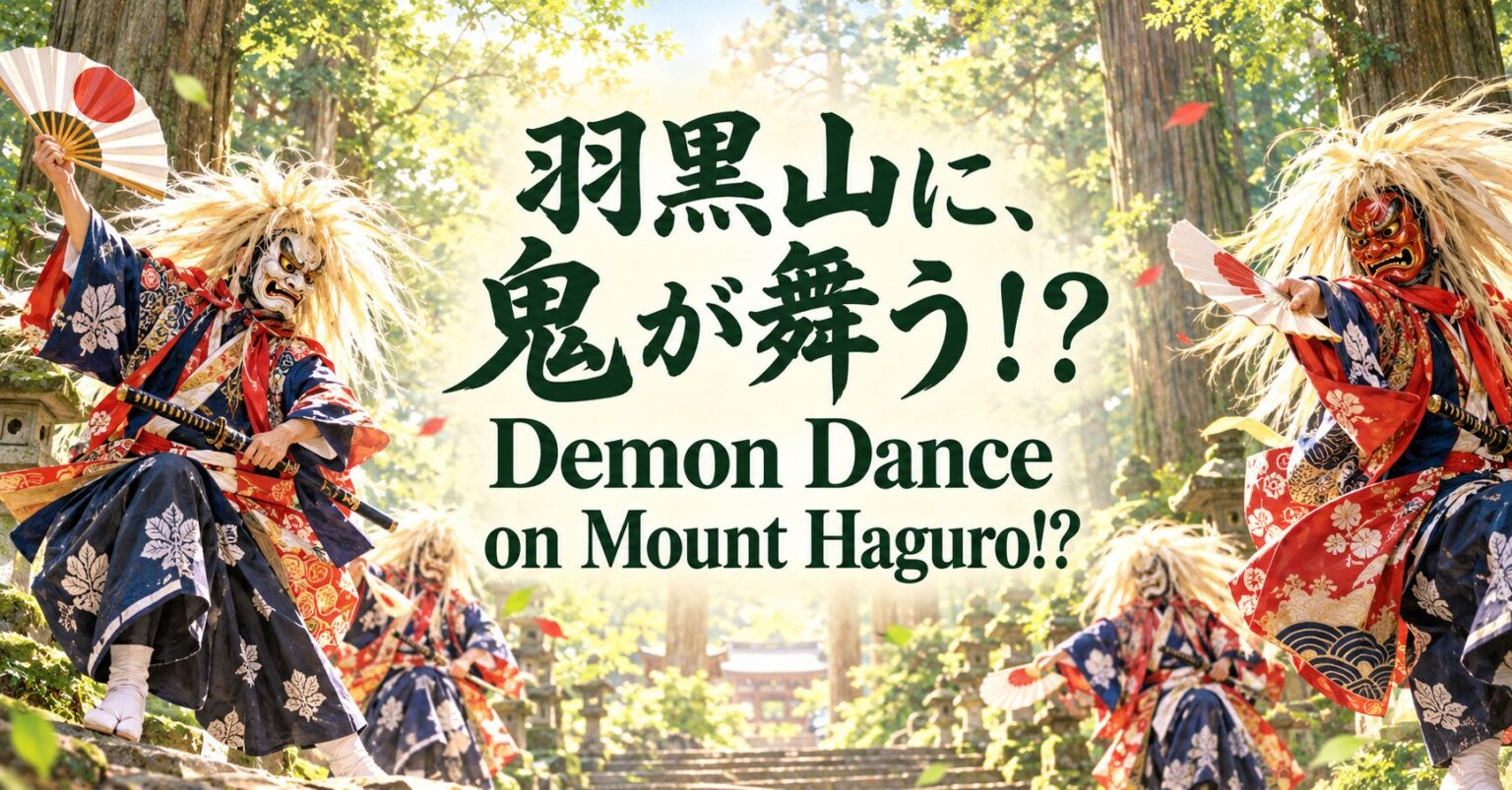
 Demons Dancing on Mount Haguro!?
 Why a dragon god at a Buddhist temple? The mystery of Zenpoji (Tsuruoka) and its sea-guarding dragon faith
 Michelin-Starred Sakata: A Two-Star Tour Built on the Wealth of the Kitamae Ships
- STAY WITH US -
Your Base for Exploring Tsuruoka
A small guesthouse in central Tsuruoka, Yamagata. The perfect base for your trip to Dewa Sanzan and Shonai.
Book Now →