
So you’ve decided to visit Mt. Haguro — but what should you wear? How long does it take? What about rainy days?
Ever wondered about these?
Surprisingly often, people only realize once they’re there: “I wish I’d known that beforehand!”
As a local, I’ve put together an honest rundown of what to wear, bring, when to go, and how long it takes, so you won’t regret your Mt. Haguro visit. If it’s your first time, I hope this helps. 😊😊
→ See the highlights of Mt. Haguro here (Article No.No.5)
→ Dewa Sanzan access info here (Article No.No.3)
What Kind of Place Is Mt. Haguro? The Basics First
Before we get to clothing and gear, here’s a quick look at what kind of place Mt. Haguro is.
- You climb a 2,446-step stone staircase up the mountain (or you can drive to the summit)
- The path mixes earth, stone, and tree roots, and gets especially slippery after rain.
- The elevation gain to the summit is roughly 150 m (490 ft). It’s not a brutal climb, but if you don’t exercise much, your legs will feel it.
- The approach runs through shady cedar avenues the whole way. It stays relatively cool even in summer, but you’ll still work up a sweat.
- Many people come in sneakers, but shoes with solid grip are far more comfortable.
In short: come with the mindset of a light hike and you’ll be just fine.
What to Wear: Recommendations by Season
Spring (4–6): What to Wear
4 to 5 (April–May) still bring many chilly days, and the cedar avenue feels especially cool.
- ✅ A light, layerable outer layer (fleece, hoodie, etc.)
- ✅ Easy-to-move-in trousers (skirts are awkward on the steps)
- ✅ Comfortable shoes with good grip
- ⚠️ If you come lightly dressed, the approach is colder than you’d expect. Bring an extra layer!
Summer (7–8): What to Wear
It’s cooler than expected in the shade of the cedars, but you’ll sweat once you start climbing.
- ✅ Moisture-wicking T-shirts or tops
- ✅ Easy-to-move-in trousers or shorts
- ✅ A hat (the sun is strong near the summit)
- ✅ Sunscreen
- ⚠️ Sandals, heels, and leather shoes are a no-go. The stone steps are slipperier than you’d expect.
- ⚠️ Wet steps are extremely slippery. Take extra care on rainy days.
Autumn (9–10): What to Wear
This is my personal favorite season for comfort. 😊😊 Temperatures are mild, but watch out for the morning and evening chill.
- ✅ A light, layerable outer layer
- ✅ A long-sleeve shirt plus something to layer over it
- ✅ Dress for the temperature gap between midday and morning or evening
Winter (11–3): What to Wear
The steps get buried in snow. The usual stone-step pilgrimage is difficult in winter, and most people drive up to the summit.
- ✅ A warm, waterproof outer layer
- ✅ Snow boots (ordinary sneakers are slippery and dangerous)
- ✅ Gloves, hat, and scarf
- ⚠️ Ordinary shoes are dangerous on snow-covered steps. If you want to walk them in winter, consider lightweight crampons.
→ More on Mt. Haguro in winter here (Article No.No.32)
What to Bring: The Packing List
Here are things that come in handy no matter the season.
Essentials
- Comfortable shoes (grippy sneakers or better)
- Drinks (almost no vending machines on the approach; there’s a shop at the summit)
- Small change (for offerings, charms, the shuttle bus, and so on)
- Smartphone (for maps and emergencies)
Nice-to-have items
- Towel or handkerchief (for wiping sweat)
- Rain gear (folding umbrella or rainwear; the cedars give shade but rain still gets through)
- Trekking poles (for anyone with weak knees; a big help on the descent)
- Light snacks (for when you get peckish; there’s also a teahouse at the summit)
- A camera (everything you photograph turns out beautifully 😊😊)
What you don’t need to bring
- Heavy bags or large backpacks (they make the climb and descent harder)
- High heels or sandals (high risk of falling on the steps)
How Long Does It Take?
“How long does it take?” is a common question, and it varies a lot depending on how you visit.


If you walk the staircase, the climb up takes about 40 to 60 minutes, and the way down about 30 to 40 minutes.
There’s a five-story pagoda and rest spots along the way, so a leisurely climb with photo stops can take longer than the times above. I recommend planning with plenty of buffer!
Times and Seasons to Avoid
Mt. Haguro is enjoyable any time of year, but to be honest, there are busy periods and conditions best avoided.
Busy periods
- Golden Week (months 4-end to 5-start, i.e. late April to early May)
- Obon (mid-August, month 8)
- Peak autumn foliage — early-October weekends (month 10)
During these periods the parking lot can fill up. If you can, aim for a weekday or early morning.
Conditions to Avoid
⚠️ Right after heavy rain or a typhoon, the steps become extremely slippery. The risk of falling is high, so take great care visiting in or just after rain.
Light rain is fine for a visit, but always watch your footing. The cedar avenue in the rain is magical, so with good rain gear it can be a surprisingly hidden gem. 😊😊
Common Mistakes and How to Avoid Them
Here are the “oops!” moments I’ve actually heard about and seen.
Mistake 1: Slippery Shoes
The steps are a mix of old stone, tree roots, and moss. Thin or smooth soles are genuinely dangerous. Always choose shoes with good grip.
Mistake 2: Forgetting to Bring Water
There are almost no vending machines along the approach. There’s a shop at the summit, but you’ll get thirsty before you finish the climb. Bring 500 ml or more of water with you.
Mistake 3: Misjudging the Time
“30-minute climb, I bet,” they think — then it takes over 1 hour to reach the summit and they miss the bus back — this happens more often than you’d think. I recommend allowing a comfortable round-trip buffer of 3 hours.
Mistake 4: Cloudy at the Summit
Even when the forecast says “sunny,” it’s often cloudy inside the cedar avenues. That said, a cloudy Mt. Haguro has its own special mood, so don’t fret too much about the weather. 😊😊
失敗⑤ 五重塔を見逃した
石段を登りはじめて10分ほどで、左手に五重塔があらわれます。国宝で、東北地方では最古の塔。なのに「早く登らなきゃ」と気が急いて、ちらっと見ただけで通り過ぎてしまう人が意外と多いんです。
もったいない! 少し立ち止まって、距離をとって見上げてみてください。杉並木のなかにすっと立つ姿は、写真で見るより何倍も迫力があります。ここだけでも来た価値があると思えるくらいの場所です😊
Mistake 6: Expecting a Sweeping View from the Summit
"Once I climb all the way up, the view must be amazing" — if that's your expectation, you might be a little let down. The summit of Mt. Haguro is surrounded by forest, and there's no wide-open panorama waiting for you.
But what you get here isn't scenery — it's the grandeur of the Sanjin Gosaiden shrine, the sense of accomplishment from the climb, and the atmosphere of the place itself. Knowing from the start that "this isn't a place you come to for the view" lets you properly savor what Mt. Haguro truly has to offer.
Wrap-up
To sum up the keys to a no-regrets visit to Mt. Haguro: —

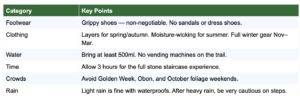
With solid preparation, Mt. Haguro becomes a truly wonderful experience.
1,400 years of history are layered into these stone steps and the cedar avenue — come experience it on your own two feet!😊
→ Mt. Haguro’s top 10 must-sees here (Article No.No.5)
→ Walk the steps or drive up? How to choose your visit style (Article No.No.8)
Guesthouse Watausagi sits right in the heart of Dewa Sanzan territory — perfectly positioned between Hagurosan, Gassan, and Yudonosan. Guests come from across Japan and around the world to explore these sacred mountains. Make Watausagi your base and discover the spiritual world of Dewa Sanzan! 😊😊
I also share the everyday charms of my home ground — Yamagata, Tsuruoka, and the wider Shonai region.
I'm always sharing updates and local tips on Instagram Stories. Follow us on Instagram and stay in the loop! 😊😊
Likes and shares make my day 💕💕
📖 やまがたいいとこ の関連記事
 Demons Dancing on Mount Haguro!?
 Why a dragon god at a Buddhist temple? The mystery of Zenpoji (Tsuruoka) and its sea-guarding dragon faith
 Michelin-Starred Sakata: A Two-Star Tour Built on the Wealth of the Kitamae Ships
- STAY WITH US -
Your Base for Exploring Tsuruoka
A small guesthouse in central Tsuruoka, Yamagata. The perfect base for your trip to Dewa Sanzan and Shonai.
Book Now →